Pay-per-click that fills tables — not just clicks
Most restaurant PPC burns budget on one bloated ad group pointed at a homepage. We run tightly-themed campaigns to purpose-built landing pages — averaging a 20% conversion rate.
You’re not overpaying for clicks. You’re paying for the wrong ones.
Thousands spent, nothing back
A few keywords crammed into one ad group, bids set blindly, and every click dumped on the homepage. No relevance, no landing page, no leads.
$25–50 a click, and it stings
Competitive markets get expensive fast — and without a quality-score strategy, you pay top dollar for every one of them.
Google rewards relevance. Tightly-themed ad groups pointed at matching landing pages lift your quality score — which lowers your cost per click and raises your conversions at the same time.
Our restaurant PPC method
Keyword research & grouping
Every offer mapped to its own tightly-themed ad group — cuisine, location, occasion, delivery.
Negative keywords
Blocking recipes, jobs, cooking classes and competitors — the #1 fix for wasted spend.
Matching landing pages
Each ad group gets a dedicated page built to capture the call or the reservation.
Track & scale
Three conversion types tracked, then we scale what profits and cut what doesn’t.
How we structure your ad groups
Which platforms?
We run both — Google for reach, Bing for cheaper, untapped clicks.
Why PPC works so well for restaurants
Live in a day
Sit at the top of “restaurant near me” today — no waiting months for rankings to build.
Precise targeting
Reach diners by neighborhood, demographic and intent — spend only where it pays back.
Ready-to-act diners
You reach people at the bottom of the funnel — searching now, ready to book or order.
What a high-converting restaurant landing page needs
PPC questions, answered
How much should a restaurant budget for PPC?+
Most independent restaurants see solid results starting around $1,000–$2,000/month in ad spend, on top of management fees. We build a plan around your market and goals during the free audit.
How fast will I see results?+
Campaigns typically go live within 2–3 business days of approval. You’ll start seeing clicks and calls immediately, though we usually need 2–3 weeks of data to fully optimize bids and keywords.
Do you require a long-term contract?+
No. We work month-to-month. If a campaign isn’t performing, you’re free to walk away — though we track everything transparently so you’ll see exactly what’s working.
What’s the difference between PPC and your SEO service?+
PPC gets you to the top instantly and you pay per click; SEO builds free, compounding rankings over months. Most restaurants run both — PPC for immediate bookings, SEO for long-term rank ownership.
Which platforms do you advertise on?+
Primarily Google Ads, since that’s where the vast majority of “restaurants near me” searches happen, plus Bing Ads for additional reach at a lower cost per click. We can add Meta (Facebook/Instagram) ads as a complementary channel.
Stop feeding budget to bad clicks
We’ll audit your current campaigns free and show you exactly where the money’s leaking. New clients start with $600 in ad credits.
Most Restaurants Waste Their Ad Budget Before They Even Realize It
We see two scenarios over and over. Scenario 1: a restaurant has already spent thousands of dollars on Google Ads and received little or no return on investment. Scenario 2: they’ve learned that cost per click for restaurant advertising can reach $25-50 per click and simply cannot understand why they’d spend that much on advertising.
The majority of PPC campaigns fail because restaurant owners miss important details — selecting a few keywords, grouping them into a single ad group, bidding too high or too low, and sending every click to the homepage. Google places great emphasis on relevance: the quality of your ads and your landing page directly impacts your position in paid listings and your cost per click.
Let’s Get StartedWhat is Pay-Per-Click (PPC) Advertising?
SEO is more of a long-term approach, but paid online marketing — PPC ads and Google Ads campaigns — is a good place to start putting your restaurant in front of hungry customers right away:
- Google Pay-Per-Click Campaigns
- Bing Ads Pay-Per-Click Campaigns
- Facebook/Instagram Campaigns
This is a quick, efficient, and successful approach to reach your goals — putting your business in the best possible light in search results and social media feeds with just the click of a button, while creating a long-term source of leads you can turn on and off at your leisure.
PPC Ad Formats to Know
- Search Engine Text Ads: Simple, effective ads that appear alongside search engine results, targeting users actively searching for relevant keywords. Google Text Ads represent a substantial portion of online ad purchases today.
- Shopping Feed Ads: Ideal for e-commerce, these ads display product images and prices directly in search results.
- Remarketing Ads: Re-engage users who have previously interacted with your website or app, keeping your brand top-of-mind.
- Display Ads: Found across websites and social platforms like Twitter, Instagram, and Facebook — excellent for brand awareness and engagement.
With a focus primarily on search engine text ads due to their prevalence, PPC offers versatile options to cater to diverse advertising needs for your restaurant.
The Real Benefit of Restaurant Pay-Per-Click Advertising
So what’s the real benefit of Pay-Per-Click advertising like Google Ads and Bing Ads? There are several huge benefits to using them:
Quick Campaign Setup
With just a few clicks, you can set up entire advertising campaigns in a day and have them live, positioning your restaurant at the top of search results for phrases like “restaurant near me.” This is much faster than SEO, which often requires 6-12 months to achieve similar results.
Precise Targeting
PPC advertising allows you to narrow down your target audience by location, demographics, financial criteria, and more — ensuring your ads reach the right customers who are more likely to convert.
Reaching Customers Ready to Take Action
Your restaurant’s ads are shown to people actively searching for your services who are ready to make a reservation, order online, or visit — letting you capture and convert them into loyal patrons.
The Different Pay Per Click Platforms
There are several PPC platforms available, but the two most prominent ones we focus on and utilize in all of our restaurant marketing campaigns are Google Ads and Bing Ads.
When you create campaigns on Google Ads, your restaurant’s advertisements appear on Google’s search network as well as partner websites if you choose to enable that option. With Bing Ads, you run ads on the Bing search engine as well as Yahoo and other partner platforms.
We recommend allocating around 85-90% of our restaurant clients’ budgets to Google Ads and the remaining portion to Bing Ads. While Google holds the majority share of the search market, Bing often remains untapped by many businesses — a hidden gem that can yield excellent results at a more cost-effective price.
Understanding the Auction Process and Quality Score
Many people believe the Google Ads auction is solely based on the highest cost per click (CPC) — “if I increase my bid slightly, I’ll secure the top position.” In reality, Google’s primary objective is delivering relevant results to users, so it can’t simply award the top spot to the highest bidder. Instead, Google uses a metric called Quality Score to assess sponsored ads on the platform.
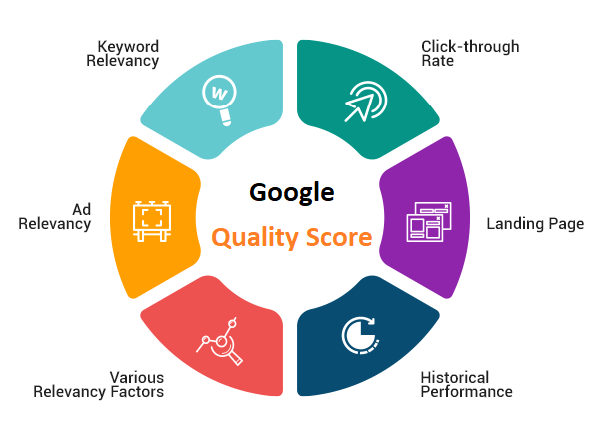
Quality Score is determined by several criteria:
- Your ad click-through rate (CTR)
- The relevance of each keyword to the ad group it’s in
- The relevance of your ad text
- Your account’s historical performance
Google rewards ads with higher Quality Scores by improving their ad rankings and reducing overall CPCs — which is why keeping your ads relevant and engaging is so important.
Know Your Budget and Your Numbers
The first step in launching your restaurant’s PPC campaigns is determining your monthly advertising budget. Even in smaller towns, we recommend establishing a minimum monthly advertising budget of $1,000 for your restaurant. In larger cities like Houston or Los Angeles, that budget may not be sufficient — when cost per click exceeds $1-5, a $1,000 budget can deplete quickly, resulting in less than 300-560 clicks.
Ultimately, the crucial factor is return on investment (ROI). If you invest $1,000 and acquire customers that generate $4,000 in profit, that’s a fourfold return — well worth it.
$2 – $4
Average cost per click (CPC) for search ads in the restaurant industry.
6 – 7%
Average click-through rate (CTR) for restaurant search ads.
2 – 15%
Average conversion rate range for restaurant search ads, depending on sub-industry.
In smaller cities or less competitive markets, top-position CPC for restaurant PPC campaigns usually falls between $1 and $5. In larger, more competitive markets like Minneapolis, Houston, Dallas, and Chicago, average CPC for restaurant keywords tends to run $2.50 to $4 per click.
How to Set Up the Perfect Restaurant Google Ads Campaign
Here are the critical actions you must complete to set up a campaign that delivers non-stop leads.
Keyword Research
It’s time to figure out the keywords you want to compete on. There are a variety of methods for finding keywords, including Google Ads Keyword Planner, SEMrush, and Ahrefs. To effectively advertise your restaurant, explore relevant keywords aligned with the services you offer and group them by category — general restaurant + city, cuisine-specific, special occasion, dining experience, delivery and takeout, promotional, and event hosting.
Negative Keywords
For every element of your advertising, you must research the keywords you don’t want your ads to appear for. This is one of the number one reasons why businesses blow through their ad budgets so quickly.
Negative keywords instruct Google not to display your ads when those terms appear in a user’s search. For example, if you don’t want your restaurant ads showing up for “recipes,” “cooking classes,” or “food delivery,” add these as negative keywords so your budget is spent on valuable clicks — not wasted on unrelated searches, including all of your top competitors’ names.
How Do You Choose Keywords for a PPC Campaign?
Choosing the right keywords for your PPC campaign is crucial to attract the right audience and maximize ROI. Here are the key types of keyword matches to consider:
Broad Match
Allows your ad to appear for searches that include misspellings, synonyms, and other relevant variations — helping you reach a wider audience.
Broad Match Modifiers
Adding a plus sign (+) in front of terms means your ad only shows for close variations, maintaining more control than broad match alone.
Exact Match
Targets the precise keyword or close variants, such as singular/plural forms. This offers the most control but may limit reach.
Negative Match
Ensures your ads are not shown for certain terms — avoiding irrelevant traffic and increasing your ad relevance.
For example, an ad group called “Restaurant Chicago” might include [restaurant Chicago] as an exact match keyword and “restaurant Chicago” as a phrase match keyword — with exact match typically getting a higher bid to prioritize its visibility.
Restaurant Ad Groups & Bidding
- General restaurant services: keywords like “restaurant,” “dining,” “eatery,” and “food” that represent your general offerings.
- Location-specific ad groups: target specific cities or regions where your restaurant operates, such as “restaurant Chicago” or “restaurant Los Angeles.”
- Cuisine-specific ad groups: for restaurants specializing in specific cuisines — Italian, Mexican, sushi, vegetarian, and so on.
- Special offers or promotions: happy hour specials, lunch deals, weekend brunch offers, and weekly specials.
- Event or catering services: wedding catering, corporate event venue, or private party hosting.
By organizing your ad groups strategically and using relevant keywords, you can optimize your restaurant campaigns to effectively reach your target audience and drive customer engagement.
Campaign Settings That Matter
Campaign Goal & Type
We choose “Leads” as the campaign objective and typically begin with a “Search” campaign — Google’s primary advertising that appears in Google’s main search results.
Locations & Networks
We target “People in your targeted locations” rather than Google’s suggested broader option, and we stick to the Search Network rather than search partners for stronger conversions.
Budget & Bidding
Divide your monthly ad budget by 30 for your daily spend. We use manual bidding for complete control, giving us the ability to make decisions based on real campaign data.
Setting Up Ads That Actually Convert
When setting up your restaurant ads, keep a few key factors in mind to ensure their effectiveness:
- Relevance to the ad group: your ads should be highly relevant to the specific ad group they’re targeting, capturing the right audience with a personalized message.
- Compelling and attention-grabbing: engaging headlines and persuasive content are crucial to enticing users to click through to your website or landing page.
- Visual appeal: images should be attractive and relevant to the message being conveyed, significantly enhancing user engagement.
Example of a Well-Designed Restaurant Ad
Headline 1: Enjoy Exquisite Dining
Headline 2: Award-Winning Cuisine. Unforgettable Flavors.
Display Path: /Restaurant/CityName
Description: Indulge in a Culinary Journey. Reserve Your Table Today!
We also recommend creating multiple variations of your ads within each ad group to test different headlines and determine which one performs better over time.
Ad Extensions Can Make or Break a Campaign
Adding appropriate ad extensions to your ad groups and campaigns boosts your Quality Score since they increase click-through rate. There are several variants to choose from:
Location Extension
We connect your Google Business Profile to your advertising account so you can advertise in the 3-Pack of Organic Maps that sits above the #1 organic result — a straightforward win for trust, calls, and ROI.
Call Extension
Include a tracking number in your Map Pack ad and display a phone number below your top advertising, so you can evaluate the success of your ads.
Callout Extensions
Succinct statements that emphasize benefits — “Family Owned and Operated,” 0% financing, and similar phrases that pique interest and connect with people.
Sitelink Extensions
The most common extension we employ. These take up the most space in ads, making your listing seem considerably larger than your competition’s.
Conversions & Call Tracking
To improve the effectiveness of your restaurant advertising campaigns, we create separate landing pages on your website for each ad group — tailoring content and messaging to match specific restaurant categories or offerings, with clear information, enticing visuals, menu options, testimonials, a strong call-to-action, and contact details.
It’s equally vital to set up conversions for your ad campaigns as it is to build the ads themselves. There’s no way to determine which keywords are effective without properly tracking them.
There Are 3 Types of Conversions We Set Up
Paid Google Ads Listings
Thank You Page submissions — adding conversion code to the thank you page after someone completes a form.
Google Maps Listings
Calls from a landing page, using Google’s call monitoring numbers or your own tracking setup.
Organic Search Listings
In-app extension calls — tracking the phone number that appears directly in your ad when people call rather than click through.
The conversion rate for mobile users interacting with restaurant ads is exceptionally high: 85% of people who search for eateries on their mobile devices end up making a purchase, and 64% of those conversions happen within just one hour of the initial search.
Landing Pages That Convert Clicks Into Customers
To improve the effectiveness of your restaurant advertising campaigns, create separate landing pages on your website for each ad group. Include clear information, enticing visuals, menu options, testimonials, a strong call-to-action, and contact details.
- Main keyword in the top headline
- No menu — just options to call or submit a contact form. We want to collect their information, not have them browse around!
- Advantages of your service listed below the headline
- A relevant, high-quality image
- A contact form as short as possible — just Name, Address, and Phone
- Mobile-friendly design
- Areas you service listed below
- Reviews & testimonials for your restaurant
- Trust symbols up top, like BBB rating or 5-star review icons
Remember: you may have fantastic click-through rates and ad performance, but if your landing page is poor and isn’t relevant to what the user searched for, you’ll waste a lot of money on advertising that won’t produce results.
Monitoring & Scaling Your Campaigns
Once everything is in place, it’s time to let the ads do their job — but that doesn’t mean you should sit back and never touch anything. You’ll want to spend time looking at the data in your ad account, determining which ad groups and keywords are working and which aren’t. It’s a never-ending loop of fine-tuning until you get your conversion cost as low as possible. From there, you can expand.
We have clients who spend over $20,000 every month on advertisements, and others who spend less than $1,000 each month. Guess who’s making a better profit? You guessed it — the $20,000. To scale in advertising, you have to invest money to make money.
Tools to Track PPC Performance
- Google Ads and Analytics: fundamental for tracking clicks and conversions, with real-time insight into what’s working.
- Call Tracking Solutions: monitor the volume and quality of calls generated by your ads for a deeper understanding of engagement.
- Social Media Ad Analytics: Facebook and Instagram provide their own analytics tools to assess interaction and conversion metrics.
- Heat Maps and Engagement Tools: visually analyze how visitors interact with your site after clicking an ad to optimize your landing pages.
Facebook & Instagram Advertising
SEO, website optimization, PPC, and retargeting form the foundation of our standard restaurant marketing system, primarily targeting customers who are actively looking for dining options and ready to make a reservation. But there’s another segment of potential customers who haven’t made up their minds yet — this is where Facebook and Instagram advertising becomes highly valuable.
Through targeted campaigns, you can showcase your unique offerings, mouthwatering dishes, and inviting ambiance to capture their attention and pique their interest, nurturing their curiosity and guiding them toward choosing your restaurant for their dining experience.
Let’s Get StartedTailored Solutions for Your Restaurant
Our skilled team is here to support you in crafting attention-grabbing ad creatives and persuasive copy that truly connect with your audience.
Creative Ad Design
We specialize in designing visually stunning ads that highlight your restaurant’s unique culinary offerings and ambiance.
Engaging Copywriting
Our writers develop compelling narratives that entice potential customers and effectively communicate your brand’s message.
With extensive experience in the food service industry, our approach ensures your promotional content is not only appealing but also strategically aligned with your business goals — helping your restaurant stand out in a crowded market and drive more traffic through your doors.
Frequently Asked Questions: PPC Advertising for Restaurants
What is remarketing and how can it benefit restaurants?
Remarketing is a digital advertising strategy designed to re-engage customers who have previously interacted with your restaurant’s website or app. A small tracking pixel enables you to create targeted ads that appear as they browse other websites or social platforms, reminding them of your restaurant. Benefits include increased brand recall, enhanced conversion rates, cost-effective advertising, and a competitive edge through regular exposure.
How can Dine Marketers help create and manage highly effective Google Ads campaigns?
Our expert team understands the intricacies of the restaurant industry and works closely with you to develop a campaign that drives results. We identify relevant keywords, optimize your ad copy, and strategically allocate your budget to ensure maximum visibility and conversion for your restaurant.
Why is it important to have separate landing pages for each ad group?
Having separate landing pages for each ad group creates a personalized experience for potential customers. By tailoring content and messaging to match specific restaurant categories or offerings, you provide clear information, enticing visuals, menu options, testimonials, a strong call-to-action, and contact details directly relevant to what users are searching for — increasing engagement and conversions.
How can sitelink extensions enhance restaurant advertisements?
Sitelink extensions let your ads appear larger than your competitors’, occupying more space in search results and attracting more attention. They also provide additional relevant links to different sections of your website, guiding users to specific pages that match their search intent.
What are the benefits of location extensions and call extensions?
Location extensions connect your Google Business Profile to your ad account, letting you appear in the 3-Pack of Organic Maps and gaining trust, calls, and ROI. Call extensions display a phone number below your ads, making it easy for customers to reach you and letting you evaluate campaign success.
What tools can restaurants use to track PPC performance?
Google Ads and Analytics, call tracking solutions, social media ad analytics, and heat map/engagement tools all help you monitor clicks, conversions, and on-site behavior so you can continuously refine your campaigns.
Call or Visit a Digital Marketing Company That Understands the Restaurant Business
We go above and beyond to educate each crew member on the ins and outs of the restaurant market before anything else. Because how can your marketing team be successful if they don’t know how you operate? See what we mean when we say to book a chat with us below!
BOOK A STRATEGY CALL